Most developers aren’t actively job hunting, but that doesn’t mean they’re unavailable. Many are open to new opportunities if approached the right way. Here’s how you can find passive developer candidates:
- Passive developers leave subtle clues: Increased GitHub activity, LinkedIn updates, or engaging with new technologies can signal openness to change.
- They value growth: Developers are often drawn to roles offering skill development, engaging projects, or better compensation.
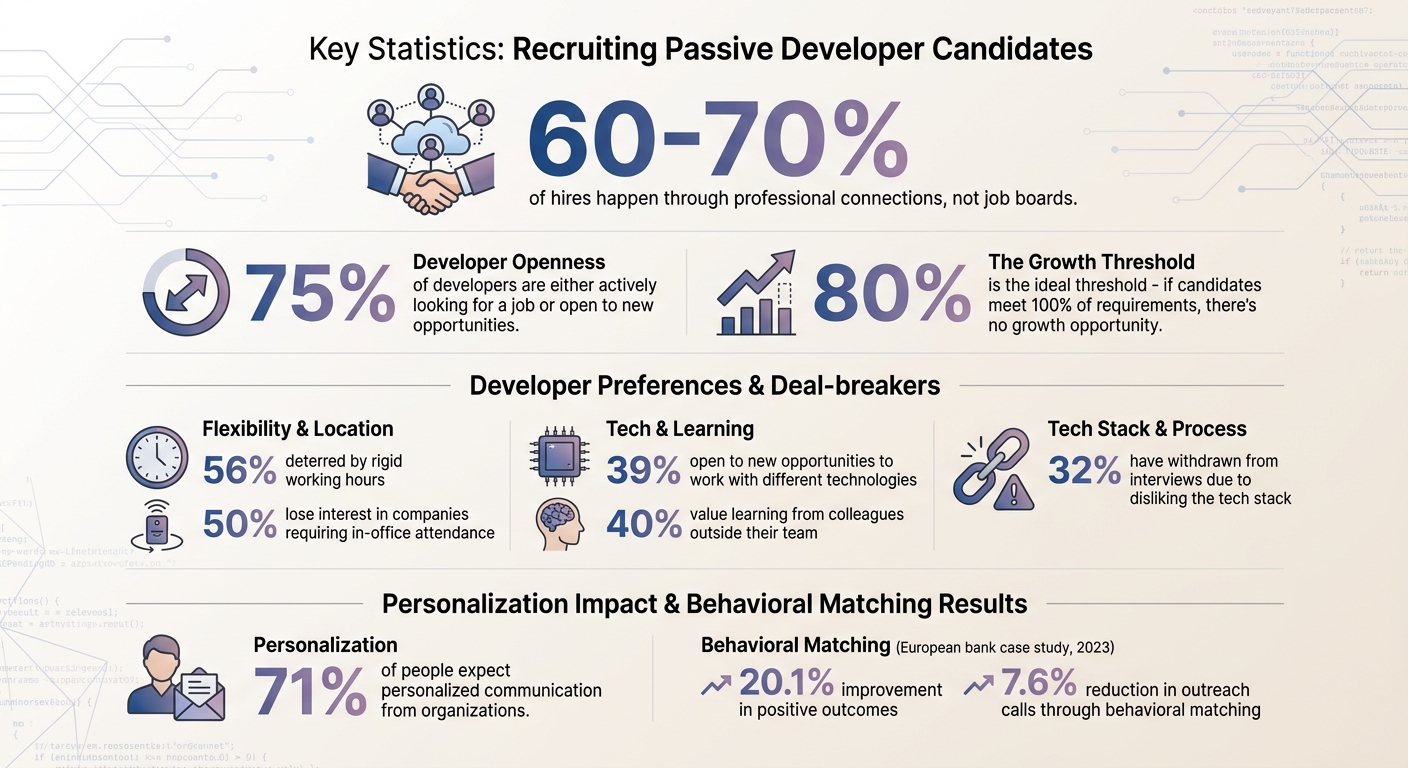
- Networking is key: 60–70% of hires happen through professional connections, not job boards.
- Approach matters: Personalized messages referencing their work and interests are far more effective than generic outreach.
- Timing is critical: Events like company policy changes or dissatisfaction with outdated tech stacks can create opportunities to connect.
The Passive Candidate Spectrum
Understanding the Different Types of Passive Candidates
Passive candidates aren’t a one-size-fits-all group - they exist on a spectrum. On one extreme, you have developers earning $400,000 or more through high-rate consulting, freelancing, or selling their own digital products. These individuals are nearly impossible to reach through traditional recruiting methods . On the other end are active vs passive developer recruitment dynamics, where active seekers compete on job boards, where the competition is fierce .
The ideal candidates often fall somewhere in the middle. These are employed developers who recognize that "relying on one paycheck is the weakest architecture a developer can design" . They’re drawn to opportunities that offer more than just a paycheck - things like engaging projects, a strong team environment, and better compensation. While they won’t typically respond to generic job postings, they are open to well-thought-out, personalized outreach.
Many of these developers are looking to grow by tackling roles that challenge them. They aim to master the 20% of skills they haven’t yet perfected. As Tyler Fisher, M.S., CHRM, puts it:
If they meet 100% of the requirements there's no growth for them, and most ambitious professionals want to grow. 80% is a good threshold .
This growth-oriented mindset makes these developers stand out. They’re driven by professional development and long-term goals, not just financial gain. This distinction highlights why selectively engaged passive candidates often outperform those who are actively seeking jobs.
Why Passive Developers Make Better Hires
Passive developers avoid the chaos of mass job applications. For active job seekers, the odds of landing a role are tough . Passive candidates, on the other hand, are discovered through the hidden job market. Networking plays a significant role here - 60 to 70% of people land jobs through their connections, with even higher percentages for senior positions .
This network-driven approach naturally emphasizes quality. Passive developers are typically focused on advancing their skills, contributing to their current roles, and maintaining active GitHub portfolios. They’re not spending their time refining resumes or rehearsing interview answers. While they remain steady in their current positions, they’re drawn to roles that offer meaningful professional growth rather than just a salary increase.
Behavioral Signals That Show Openness to New Roles
Developers don't usually broadcast their interest in new job opportunities, but their actions often speak louder than words. By observing certain behaviors, you can spot when a developer might be ready for a career change - even before they update their resume. These subtle cues are key to identifying and connecting with passive candidates.
Activity on Professional Platforms
Pay attention to developers who suddenly become more active on professional platforms. For instance, they might refresh their LinkedIn profiles, contribute more frequently to public GitHub repositories, or engage in discussions on Stack Overflow. These actions not only enhance their visibility but also suggest they’re positioning themselves for new opportunities. This shift from passive browsing to active engagement often hints at a desire to build their professional reputation.
Learning New Skills and Career Development
When developers start diving into new technologies or tools, it’s often a sign they’re exploring broader career options. Imagine a backend developer with years of Python experience who begins sharing insights about Rust or Go - this could indicate they’re eyeing roles that require those skills. Similarly, attending industry conferences shows they’re expanding their network and staying open to potential opportunities.
Keep an eye on their engagement with career-related content as well. If they’re reading articles about salary negotiation, remote work, or company cultures, they’re likely doing more than casual browsing - they’re researching their next move. Understanding what developers want is crucial when interpreting these signals. Earning certifications or completing online courses in areas unrelated to their current job is another strong signal of career exploration.
Participation in Developer Communities
A noticeable increase in community involvement is another indicator. Developers who transition from quietly observing to actively participating - whether by asking questions, sharing knowledge, or even hosting workshops - are often preparing for a career change. Active involvement in meetups, Discord channels, or Slack groups, combined with writing blog posts or speaking at events, highlights someone ready to take their career in a new direction.
Using Platform Signals to Find Passive Developers
Platforms like GitHub, Stack Overflow, and daily.dev generate behavioral data that can hint at career intent - even when developers haven’t updated their profiles. By tapping into these platform signals, you can uncover hidden opportunities to connect with passive candidates using coding-focused candidate sourcing tools.
Reading Engagement Metrics
Developers’ content engagement habits can provide a glimpse into their evolving interests. For instance, if a backend engineer who primarily works with Python starts consuming content about Rust or Go, it could indicate they’re exploring new technologies. Stack Overflow reports that 39% of developers are open to new opportunities because they want to work with different technologies .
Pay attention to signs of professional growth, like frequent interactions with career-focused articles. Similarly, spikes in GitHub contributions or increased activity on Stack Overflow can highlight individuals actively building their skills. These shifts in engagement provide valuable clues about broader behavioral trends.
Spotting Patterns in Behavioral Data
Beyond isolated actions, recurring patterns in behavior can reveal a developer’s readiness for change. For example, if a developer begins exploring skills outside their usual tech stack, it may signal they’re preparing for a new role. A frontend developer diving into DevOps or cloud infrastructure content could be signaling interest in transitioning to full-stack or platform engineering roles.
Another key indicator is cross-team knowledge seeking. Research shows that 40% of developers value learning from colleagues outside their team . Additionally, developers who lack strong internal support are more likely to consider external opportunities . If someone frequently engages with topics like "developer experience" or studies how other organizations structure their teams, it might suggest dissatisfaction with their current role. This could be the perfect time to approach them with a thoughtful, informed message.
Building Relationships Before Making Your Pitch
Developers are often laser-focused on shipping code and solving problems. To effectively connect with passive candidates, you need to step into their world before you have something to pitch.
Building trust takes time, but it can completely change how developers perceive your outreach. When you’ve already shown a real understanding of their work and offered value, your message feels less like cold outreach and more like a warm intro between peers. By establishing a presence early, you create opportunities for meaningful, professional interactions.
How to Engage with Developer Communities
Start by immersing yourself in the spaces where developers naturally gather. This could be Discord servers, Slack groups, or subreddits dedicated to specific technologies. Don’t jump in with job postings right away. Instead, focus on contributing - share useful resources, answer questions, or highlight interesting technical content.
Be helpful. If someone mentions a challenge, like debugging an issue or struggling with a new framework, offer support or suggest resources. This mirrors how developers naturally collaborate, making your presence feel authentic. By the time you bring up a role, you’ll already be seen as a trusted connection.
Sustained Engagement
After making initial connections, keep the momentum going with regular, meaningful interactions. Follow developers on GitHub - star their repositories, leave thoughtful comments on their pull requests, or share their blog posts with your network. Share relevant content consistently, whether it’s industry updates, technical articles, or insights into engineering practices. Avoid limiting your contributions to job postings alone.
These ongoing interactions build trust and lay the groundwork for conversations about roles to feel organic. When developers see you actively engaging in their technical world, they’re more likely to trust your perspective on career opportunities. The key is to create a professional relationship where discussions about new roles feel natural and welcome, not forced or intrusive.
How to Write Your First Message
Your first message to a passive developer is a make-or-break moment. Once you've established some credibility within developer communities, your outreach needs to build on that foundation. The difference between getting a response and why passive developers ignore recruiter messages often comes down to whether your message feels personal or like just another mass email.
What Works: Personalized Messages with Context
Tailor your message by referencing specific work or contributions. Mention something concrete, like a GitHub repository, a technical blog post, or an open-source project they've worked on. This shows you've taken the time to genuinely review their work, not just skim their job title. For instance, instead of a generic "I noticed your impressive background in backend development", try something like, "I saw your work on the authentication service in your payment-gateway repo - the way you handled token refresh was really clean."
Tie the role to their interests and skills. If they've been exploring Rust or actively contributing to GraphQL projects, explain how the position aligns with those technologies. Acknowledge their current situation briefly before pitching the opportunity. A simple line like, "I understand you're probably not actively looking right now", shows empathy and awareness, which goes a long way.
Keep it concise and to the point. Developers value efficiency, so skip the lengthy backstory about your company. Focus on the essentials and wrap up with a clear call to action, such as, "Would you be open to a 15-minute call next week?"
Networking plays a huge role in most career transitions, particularly for senior-level developers. Your outreach should feel personal and thoughtful, not like a bulk email .
What Doesn’t Work: Generic Templates and Spam
Generic messages are a non-starter. Developers can spot a mass email in seconds, and 71% of people expect personalized communication from organizations . Starting with lines like "I came across your profile" immediately signals a lack of effort and fails to grab attention.
Don’t overwhelm with excessive details or pushy language. Long paragraphs about your company’s culture, detailed job descriptions, or attachments in the first message come across as disrespectful of their time. Similarly, avoid pressure tactics like, "This is a rare opportunity you can't miss" or "We need to fill this role immediately." These approaches feel more like a sales pitch than a conversation starter.
Focus on value, not just features. Listing technical details like "We use React, Node.js, and PostgreSQL" is far less compelling than explaining how the role impacts critical business objectives or solves interesting challenges.
Once your message is polished, the next step is to time your outreach strategically for maximum impact.
When to Reach Out for Best Results
Timing can make or break even the most well-crafted message. Building on the behavioral signals mentioned earlier, knowing why passive developers ignore recruiters and when to engage is essential. The trick lies in identifying moments when developers are naturally more open to discussing new opportunities.
Key Trigger Events to Watch For
Certain events can make developers more receptive to outreach. For example, company policy changes like return-to-office mandates or stricter work schedules can push developers to consider alternatives. Research shows that 56% of developers are deterred by rigid working hours, and 50% lose interest in companies requiring in-office attendance . When companies announce such policies, it’s a prime opportunity to connect with their engineering teams, especially if you’re offering remote or flexible roles.
Another trigger is dissatisfaction with the tech stack. Developers stuck working with outdated systems often feel frustrated. In fact, 32% of developers have withdrawn from interviews because they disliked the tech stack . If your roles feature modern technologies like Python or Rust, targeting developers currently dealing with legacy systems can be a winning strategy. Similarly, the end of a project or contract often serves as a natural moment for developers to consider new opportunities.
Lack of growth and learning opportunities is another significant motivator. Developers who’ve stayed in static roles for 18–24 months without visible progression are more likely to explore options. As David Gibson, Staff Data Scientist at Stack Overflow, explains:
Opportunities to learn and grow are critical to retaining talent. About 75% of developers are either actively looking for a job or open to new opportunities .
These personal triggers often align with broader industry trends, creating the perfect conditions for outreach.
Tracking Industry and Personal Signals
Beyond individual triggers, keeping an eye on industry trends and behavioral signals can help you time your outreach effectively. For instance, shifts in a company’s reputation - such as negative press or declining Glassdoor reviews - can signal an impending wave of talent departures. Staying updated on tech news and monitoring review platforms can help you identify these moments.
Developers’ real-time behavior also provides valuable clues. A sudden spike in GitHub activity or increased engagement with career-related content often signals a shift in interest . On the flip side, a noticeable drop in professional activity might suggest disengagement from their current role .
Many seasoned recruiters start building relationships with potential candidates well before specific roles are open. A casual, no-pressure conversation about career goals - like a simple "coffee chat" - can establish trust and position you as a go-to contact when the developer is ready to make a move.
Measuring the ROI of Passive Sourcing
Once you've identified behavioral signals and started building relationships with passive developers, it's important to evaluate how well these efforts are paying off. Passive sourcing often requires more up-front work compared to traditional job postings. Without solid data, it can be tough to determine if your approach is connecting with the right candidates or if you need to make changes to better reach your audience. Tracking the right metrics can help you assess how effective and efficient your passive sourcing strategy really is.
Key Metrics to Track
Response Rate: This measures the percentage of candidates who reply to your initial outreach. A strong response rate suggests your messaging and targeting are hitting the mark.
Time-to-Engage: This tracks the time it takes to move from initial outreach to meaningful interaction with a candidate. Understanding this timeline can help you refine your approach to engagement.
Cost-per-Qualified-Candidate: This calculates the resources spent - such as time, relationship-building efforts, and follow-ups - for each qualified candidate. It’s a practical way to gauge whether your passive sourcing efforts are cost-efficient compared to other recruitment strategies.
These metrics not only shed light on how well passive sourcing is working but also allow for direct comparisons with more active recruitment methods.
Passive vs. Active Sourcing: A Comparison
Active sourcing typically delivers a higher volume of candidates but often lacks alignment with strategic hiring goals. Passive sourcing, on the other hand, connects you with individuals who are more selective and often better suited for long-term, thoughtful career moves.
While active channels can yield quicker results, passive candidates often show stronger commitment once they’re engaged. By tracking how candidates progress through your pipeline, you can better understand the strengths and limitations of both sourcing strategies. This insight allows you to balance speed with quality in your recruitment efforts.
How daily.dev Recruiter Finds Open-to-Opportunity Developers
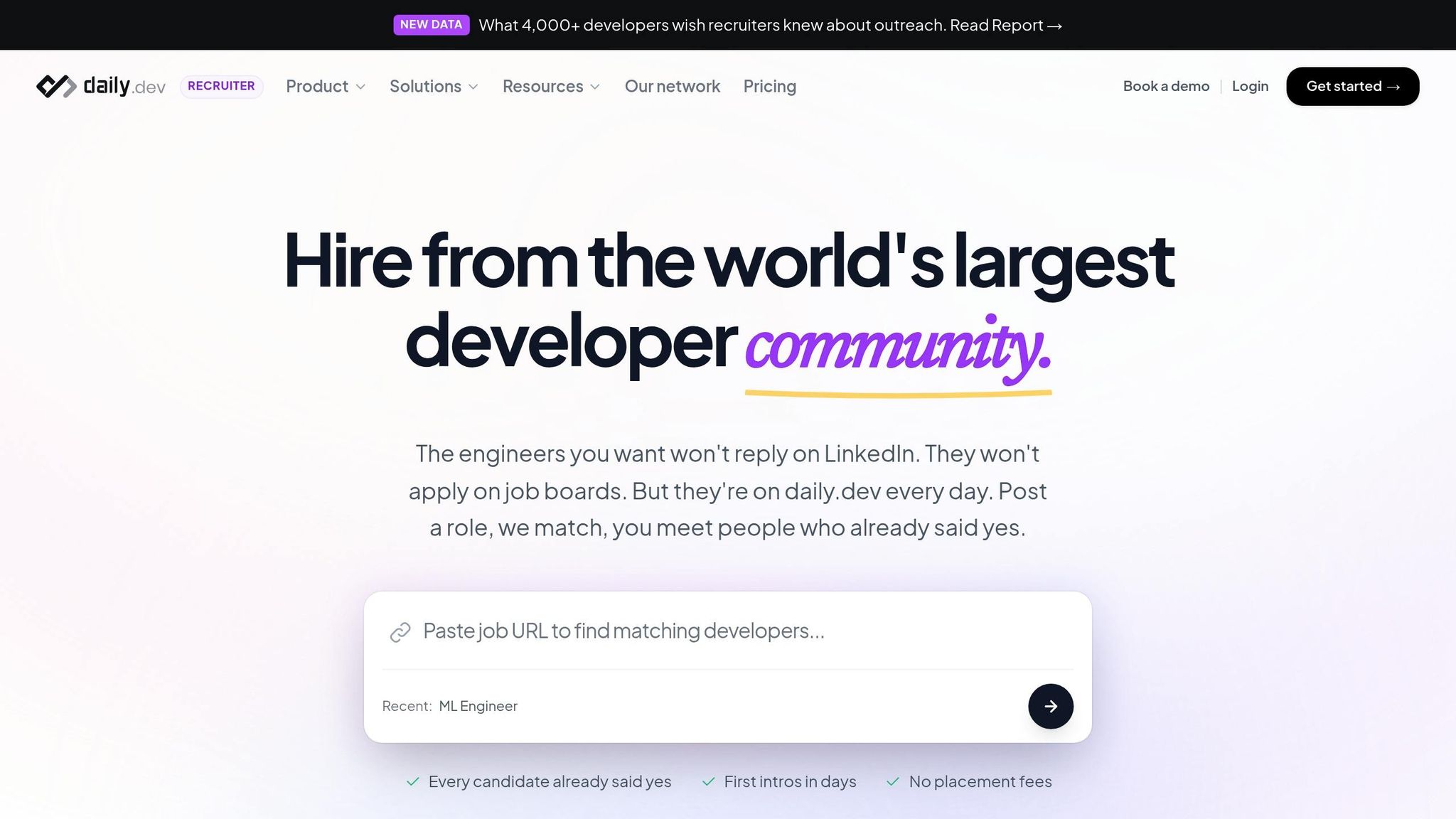
daily.dev Recruiter uses behavioral signals to create a personalized sourcing experience. Instead of relying on traditional methods, it connects with developers where they naturally spend their time - reading technical articles, learning new skills, and engaging with their professional network. By analyzing real-time behaviors like content engagement and active learning, the platform identifies developers who may be open to new opportunities. This insight comes directly from their daily activities, offering a fresh way to approach passive sourcing.
This behavior-first approach leads to a more trusted and effective double opt-in process for introductions.
Warm, Double Opt-In Introductions
On daily.dev Recruiter, every introduction operates on a double opt-in basis. Developers must actively signal their interest in opportunities before recruiters can reach out. This ensures conversations only happen with those genuinely interested, even if they haven’t updated their resume or marked themselves as "open to work." It eliminates spam and creates a more respectful interaction for both parties.
Targeting and Screening Features
The platform takes these behavioral signals a step further with advanced filtering tools. Recruiters can refine their search using technical criteria, engagement habits, and skill development indicators. Instead of relying on outdated self-reported profiles, daily.dev Recruiter highlights developers based on their actions - like learning new technologies or engaging with specific topics. This allows recruiters to find candidates who not only meet technical requirements but are also actively growing in their careers, making for more meaningful conversations.
Developer-Centric Experience
daily.dev Recruiter shifts the focus to trust and relevance, giving developers control over their visibility and the opportunities they explore. Instead of cold outreach, the platform builds on the trust within the developer community. Since many people find jobs through their networks rather than through unsolicited messages , this approach results in higher response rates and more productive interactions for recruiters. Developers engage on their terms, ensuring a better experience for everyone involved.
Conclusion
To connect with developers who aren’t actively job hunting, recruiters need to move beyond outdated methods and embrace behavior-driven strategies. By leveraging tools like behavioral tracking, crafting personalized messages, and fostering genuine relationships, it becomes much easier to identify developers open to new opportunities. Actions like learning new skills, engaging with technical content, or participating in developer communities often reveal interest and intent far better than a resume ever could.
The numbers back this up: networking accounts for 60–70% of hires . Adding behavioral matching into the mix amplifies success. For example, in 2023, a European bank saw a 20.1% improvement in positive outcomes and reduced outreach calls by 7.6% by focusing on how candidates communicated rather than just what they said .
Quality matters. Recruiters should focus on engaging with developers where they’re already active - whether that’s technical forums, meetups, or online content platforms. And when reaching out, ditch the generic templates. Personalized, context-aware messages stand out, as highlighted in our messaging framework.
Timing also plays a critical role. Trigger events like funding announcements, layoff periods, or the end of vesting cycles create natural opportunities to start conversations. Still, trust is even more crucial. As one EU National Bank executive observed:
Interactions between well-matched agents and customers appeared to be much smoother overall. It's impressive! ... the level of tension in their interactions is considerably lower .
The recruiting game has changed. Developers now expect respect, relevance, and a clear understanding of their expertise. Platforms that prioritize these values - through meaningful introductions, behavioral insights, and a developer-first approach - consistently outperform outdated mass outreach tactics. Build authentic connections, and the right candidates will come to you.
FAQs
What are the most reliable signs a developer is open to new roles?
Developers often give subtle hints when they might be open to new opportunities, even if they’re not actively searching. Some reliable signs include:
- Increased GitHub activity: A surge in contributions or new projects could indicate skill-building or showcasing work.
- Attending conferences: Networking at events might suggest they're exploring options or staying current in their field.
- Learning new technologies: Picking up fresh skills often signals a desire for growth or a shift in focus.
- Updating LinkedIn profiles: Refreshing their professional presence can be a clear indicator of readiness for change.
- Engaging with career-related content: Interacting with posts about job trends or career advice shows interest in opportunities.
- Joining developer communities: Active participation in forums or meetups could point to someone broadening their professional network.
These actions don’t necessarily mean they’re job hunting, but they often reflect an openness to exploring what’s out there.
How do I message a passive developer without sounding spammy?
To steer clear of coming across as spammy, focus on crafting personalized messages that reflect a real understanding of the developer's expertise, projects, or passions. Pay attention to behavioral cues like GitHub contributions or involvement in developer communities to fine-tune your outreach. Establish trust by actively participating in these communities or sharing content that aligns with their interests before making your pitch. Reaching out after key moments, like funding announcements or vesting periods, can also make your message feel more timely and relevant.
Which metrics best prove passive sourcing ROI?
The best way to gauge the success of passive sourcing is by focusing on three key metrics: response rates, time-to-engage, and cost-per-qualified-candidate. These metrics provide a clear picture of how well your efforts are turning passive candidates into strong potential hires.
.png)