Developers often ignore recruiter messages because they feel impersonal, irrelevant, or overly long. While 80% of developers are open to new opportunities, 43% mute or ignore outreach due to a lack of trust in recruiters. Here's why messages fail and how to fix them:
- Generic Templates: 64% of developers can spot copy-pasted messages, and 40% ignore spam-like outreach. Personalization matters.
- Irrelevant Roles: Misaligned job pitches (e.g., offering a Java role to a Python specialist) erode trust.
- Missing Key Info: Developers want upfront details - tech stack, salary range, and work model. 19% ignore messages without salary info.
- Bad Timing or Platform: Messages sent at the wrong time or via platforms developers don’t frequent often go unnoticed.
To increase response rates, recruiters should craft concise, personalized messages, highlight key job details upfront, and engage developers on platforms they already use, like GitHub or developer-focused communities. Building trust through tailored outreach is the key to bridging the gap.
::: @figure 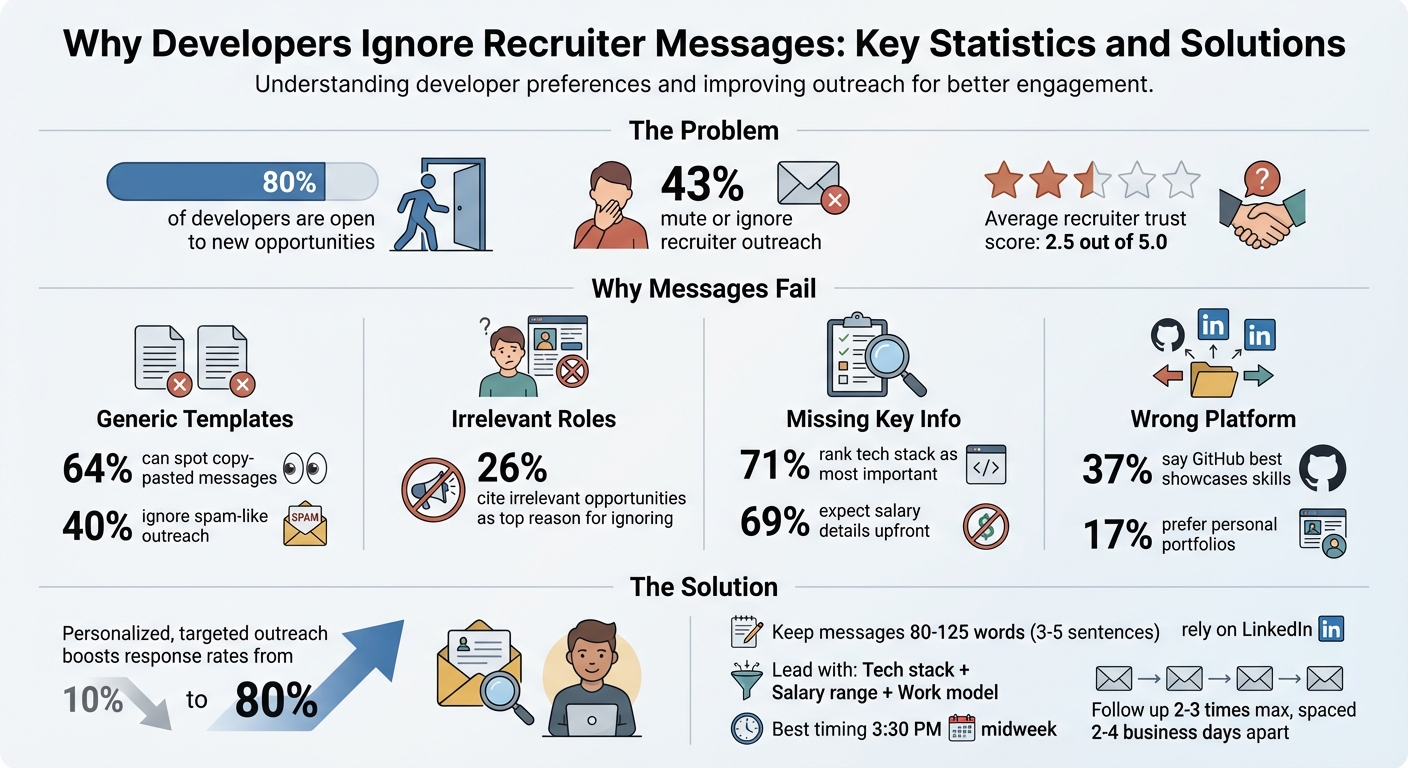 {Why Developers Ignore Recruiter Messages: Key Statistics and Solutions}
Why Recruiters Fail to Get Developer Responses
Recruiter outreach often falls flat for predictable reasons. Understanding these missteps is key to improving engagement with developers.
Generic, Copy-Paste Messages
Developers have a knack for spotting templates. A recent report revealed that 64% of developers believe recruiter messages are copy-pasted, and 40% ignore these messages because they feel like generic spam . This lack of personalization sends a clear message: the recruiter hasn’t taken the time to understand their background.
"Developers can spot a template instantly. When everything looks like spam, nothing gets read. The mass outreach method didn't just fail. It poisoned the well." - daily.dev State of Trust Report
While mass messaging might catch the attention of the 15% of developers actively job hunting, it completely misses the mark with the 60% of passive candidates who are open to opportunities but tend to ignore templated emails . Instead of sending 100 generic messages, putting effort into 10 well-researched, personalized emails often delivers better results .
But personalization isn’t just about avoiding templates; it’s about offering roles that actually make sense.
Mismatched Job Opportunities
Nothing erodes trust faster than pitching a role that doesn’t align with a developer’s skills. For example, offering a Java role to someone who specializes in Python screams poor research. Twenty-six percent of developers cite irrelevant job opportunities as the top reason they ignore recruiter outreach .
This misalignment can be avoided by verifying a developer’s current work through platforms like GitHub or Stack Overflow, rather than relying on outdated profiles . Taking this extra step not only ensures relevance but also builds credibility for future interactions.
Messages That Are Too Long
Developers are busy, and long-winded messages often lose their attention. When key details like the tech stack, salary range, and work model are buried - or worse, missing - messages are quickly dismissed. In fact, 19% of developers ignore messages that don’t include salary information .
The most effective messages cut straight to the chase, leading with what developers care about most:
- Tech stack
- Salary range (e.g., $140,000–$180,000)
- Work model (remote, hybrid, or on-site)
Starting with these "Big Three" in the first line ensures your message grabs attention and respects their time.
Wrong Platform or Bad Timing
Even a well-crafted message can fail if delivered on the wrong platform or at an inconvenient time. Reaching out during peak hours, when inboxes are flooded, increases the likelihood of your message getting lost. A small tweak, like sending an email at an offbeat time - say, 1:37 PM - can make your outreach stand out .
Equally important is choosing the right platform. Engaging developers on spaces they already frequent, such as GitHub or developer communities, makes your outreach feel more natural and less intrusive. It’s all about meeting developers where they are, on their terms.
What Developers Actually Want from Recruiters
Generic outreach is a surefire way to lose a developer's interest. To make meaningful connections, recruiters need to understand what developers value most and tailor their approach accordingly. It’s not just about listing job specs - it’s about showing respect for their expertise and career goals.
Recognition of Their Skills and Projects
Developers want recruiters to go beyond surface-level research. While LinkedIn might give a snapshot of their past roles, 64% of developers say platforms like GitHub and personal portfolios better showcase their actual skills. Ignoring these resources can make your outreach feel generic, which is why 40% of developers dismiss messages as spam.
To stand out, reference specific projects or contributions. For example, mentioning a developer's work on a React component library or their Kubernetes expertise shows you’ve done your homework. This personalized touch can make a developer feel valued as an individual, not just another name in a database.
Opportunities That Match Their Career Path
Developers evaluate job opportunities based on how well they align with their career goals. The tech stack is a dealbreaker for most, with 71% ranking it as the most important detail. Salary transparency is another key factor - 69% of developers expect salary details upfront, and 19% will dismiss messages that skip this information altogether.
Work model preferences are equally critical: 63% of developers prioritize remote or hybrid options. Together, these elements - tech stack, salary range (e.g., $140,000–$180,000), and work model - are the foundation for gauging whether a role fits their personal and professional goals. Beyond that, respecting these priorities shows that you value their time and ambitions.
Respect for Their Time and Stated Preferences
Developers appreciate concise, to-the-point communication. Keep your outreach between 80–125 words, or roughly three to five sentences. Skip unnecessary pleasantries and lead with the most important details, like the tech stack and compensation.
Timing is crucial, too. Reaching out midweek in the early afternoon (1:30 PM–3:30 PM) avoids clashing with their morning standups or late-day tasks. For follow-ups, limit yourself to two or three messages, spaced 2–4 business days apart. Use low-pressure prompts like, "Does this align with your current interests?" instead of jumping straight to a meeting request.
This thoughtful approach respects their time and preferences while recognizing that 80% of developers are open to new opportunities. By giving them control over how and when they engage, you build trust and increase the likelihood of a positive response.
How to Get More Developers to Respond
Understanding what developers are looking for is just one piece of the puzzle. The other piece? Reaching out in a way that shows respect, relevance, and genuine interest. Below are some practical strategies to turn these insights into effective outreach that developers will actually respond to.
Keep Messages Short, Specific, and Personal
When reaching out, get straight to the point. Start with the essentials: the tech stack, salary range, and work model (remote or hybrid). For instance:
"We're hiring a Senior Backend Engineer to work with Go, Kubernetes, and PostgreSQL ($140,000–$180,000, fully remote)."
This immediately tells the developer whether the role is worth their time. Once you've covered the basics, add a personal touch. Mention something specific about their work - maybe a project, contribution, or skill that caught your attention. Avoid generic lines like "I came across your profile." Including these details upfront shows that you’ve done your homework and respect their time.
Use Platforms Where Developers Are Active
Developers don’t just hang out on traditional job boards. They spend much of their time on platforms where they build, learn, and solve problems. In fact, 37% of developers say GitHub best showcases their skills, while 17% prefer personal portfolios. Compare that to just 14% who rely on LinkedIn for this purpose.
To reach developers effectively, expand your strategy to platforms they frequent. For example, daily.dev Recruiter connects you with developers actively engaging with technical content. Its double opt-in model ensures that only developers interested in your opportunities see them, cutting down on spam. One recruiter who used GitHub for outreach saw a 60% open rate and strong engagement from candidates.
Research Before You Reach Out
Generic messages won’t cut it. Before reaching out, take the time to review a developer’s GitHub repositories, Stack Overflow contributions, or personal blog. Focus on recent activity (from the past six months) to gauge their current interests and engagement, rather than relying solely on resumes.
Petr Belousov, CEO of CandyJar, showed how effective this approach can be. His team analyzed specific GitHub projects, like a passenger transport simulator, and referenced HackerRank practice challenges in their outreach. This level of detail helped them achieve an 80% response rate, securing 8–10 interview candidates from just 10–15 targeted emails in two weeks. Partner with your engineering leads to identify relevant technical signals, and use this information to craft messages that reflect real understanding and effort.
Honor Developer Preferences and Offer Clear Value
Respecting what developers want is critical. If a developer’s profile says they’re only interested in remote roles or specific technologies, tailor your pitch accordingly. Beyond mentioning the tech stack and salary, highlight aspects like architectural challenges, growth opportunities, or team culture that align with their career goals. Use low-pressure language - phrases like, "Does this align with your current interests?" - to keep the conversation developer-focused and let them feel in control.
Build Relationships, Not Just Transactions
Building trust takes time, and it starts with personalized, thoughtful outreach. The best recruiter-developer relationships go beyond a single job opening. Even if a developer isn’t interested right now, staying in touch respectfully can pay off later. Share relevant technical content, acknowledge their public contributions, or simply check in without pushing an agenda.
While 80% of developers are open to hearing about new opportunities, recruiters still face an average trust score of just 2.5 out of 5.0. By focusing on long-term connections rather than quick wins, you can stand out and build credibility in a crowded field.
Conclusion
Developers often ignore recruiter messages because many of these messages fail to respect their time, skills, and preferences. When most developers dismiss generic, templated outreach, the issue lies not with the developers but with the approach recruiters take.
The solution is clear: focus on what developers truly value. They want upfront details like the tech stack, salary range, and work model. They appreciate when their work is acknowledged and when opportunities align with their career aspirations. Above all, they expect recruiters to do their homework before hitting "send." By highlighting the most important job details, tailoring each message, and respecting what developers care about, recruiters can begin to close the trust gap.
Even small adjustments can lead to big improvements. Switching to personalized, targeted outreach has been shown to boost response rates from 10% to 80%. This means sending fewer but more meaningful messages that build genuine connections. In the end, this approach doesn’t just improve response rates - it helps rebuild the trust that’s critical for long-term success.
The current lack of trust highlights why personalization is so important. By sharing relevant details, thoroughly researching candidates, and respecting their preferences, recruiters can overcome this challenge and create stronger, more meaningful relationships.
FAQs
What are the best ways for recruiters to personalize messages and get more responses from developers?
Recruiters looking to boost response rates should prioritize authentic, personalized communication that resonates with each developer's interests and career goals. Start by digging into their recent work - whether that's their GitHub contributions, blog posts, or conference presentations - and reference these in your outreach. For instance, instead of a generic "Hi there", mention their open-source project or a specific technology they've been working on. This shows you’ve taken the time to understand their expertise.
Make it clear how the role aligns with their skills and aspirations. Highlight specific aspects of the position, like the tech stack, unique challenges, or key responsibilities, to make the opportunity feel tailored to them. A professional yet friendly tone works best, and if you’ve interacted with them before or share a mutual connection in the tech community, be sure to mention it - it helps build trust.
Timing matters too! Sending messages mid-week, especially in the early afternoon, can improve your chances of getting a reply.
What job details should recruiters include to grab a developer's attention?
When contacting developers, it’s important to share the key job details right away. This shows you understand what matters to them and value their time. Be upfront about the salary range, spell out the tech stack (languages, frameworks, tools), and detail the main responsibilities of the role. To make the position more appealing, mention any noteworthy challenges or projects they’ll tackle.
Including these details not only makes your message more targeted but also helps establish trust and boosts the likelihood of getting a reply.
Why should recruiters use developer-focused platforms like GitHub for outreach?
Recruiters can use platforms like GitHub to establish genuine connections with developers by referencing their actual work - whether it’s repositories, contributions, or open-source projects. This approach shows that the recruiter has done their homework, making the outreach feel more personal and relevant, rather than generic or detached.
Since many developers spend a large chunk of their professional time on GitHub, it’s a natural and credible place to engage with them. Crafting messages that reflect a developer’s skills, interests, and recent activity not only shows respect for their expertise but also boosts the likelihood of a response. By prioritizing personalized, value-focused communication, recruiters can build trust and create stronger relationships with developers.
.png)