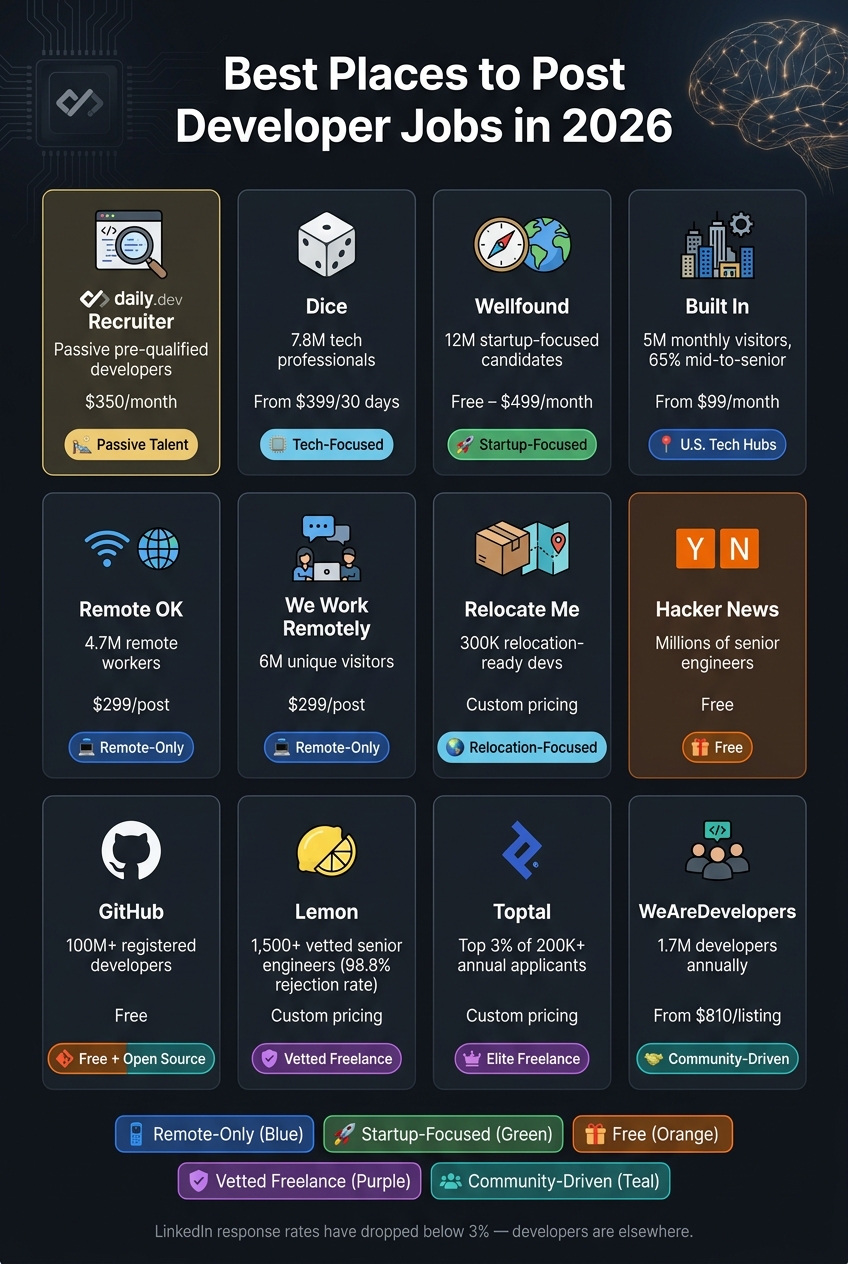
LinkedIn is no longer the best option for hiring developers. With response rates dropping below 3% and high costs, recruiters are turning to platforms where developers spend their time. Here are the top alternatives for posting developer jobs in 2026:
- daily.dev Recruiter: Matches jobs to developers based on their activity; $350/month per role.
- Dice: Tech-focused job board with 7.8M users; starts at $399 for 30 days.
- Wellfound (formerly AngelList Talent): Startup-focused platform; free basic plan, paid upgrades start at $499/month.
- Built In: Combines job boards with employer branding; starts at $99/month.
- Remote OK: Remote-first job board; $299 per post with optional upgrades.
- We Work Remotely: Remote-focused platform with 6M+ visitors; $299 per post.
- Relocate Me: Targets relocation-ready developers; custom pricing.
- Hacker News: Free "Who Is Hiring?" threads for direct employers only.
- GitHub: Source candidates through code contributions; free with optional paid tools.
- Lemon: Curated and vetted freelancers; custom pricing.
- Toptal: Elite freelance talent network; custom pricing.
- WeAreDevelopers: Developer community with job ads starting at $810.
These platforms cater to specific hiring needs, from remote roles to startup-focused developers. When hiring globally, following remote technical talent best practices ensures a smoother process. Choose the one that aligns with your goals for better results.
1. daily.dev Recruiter
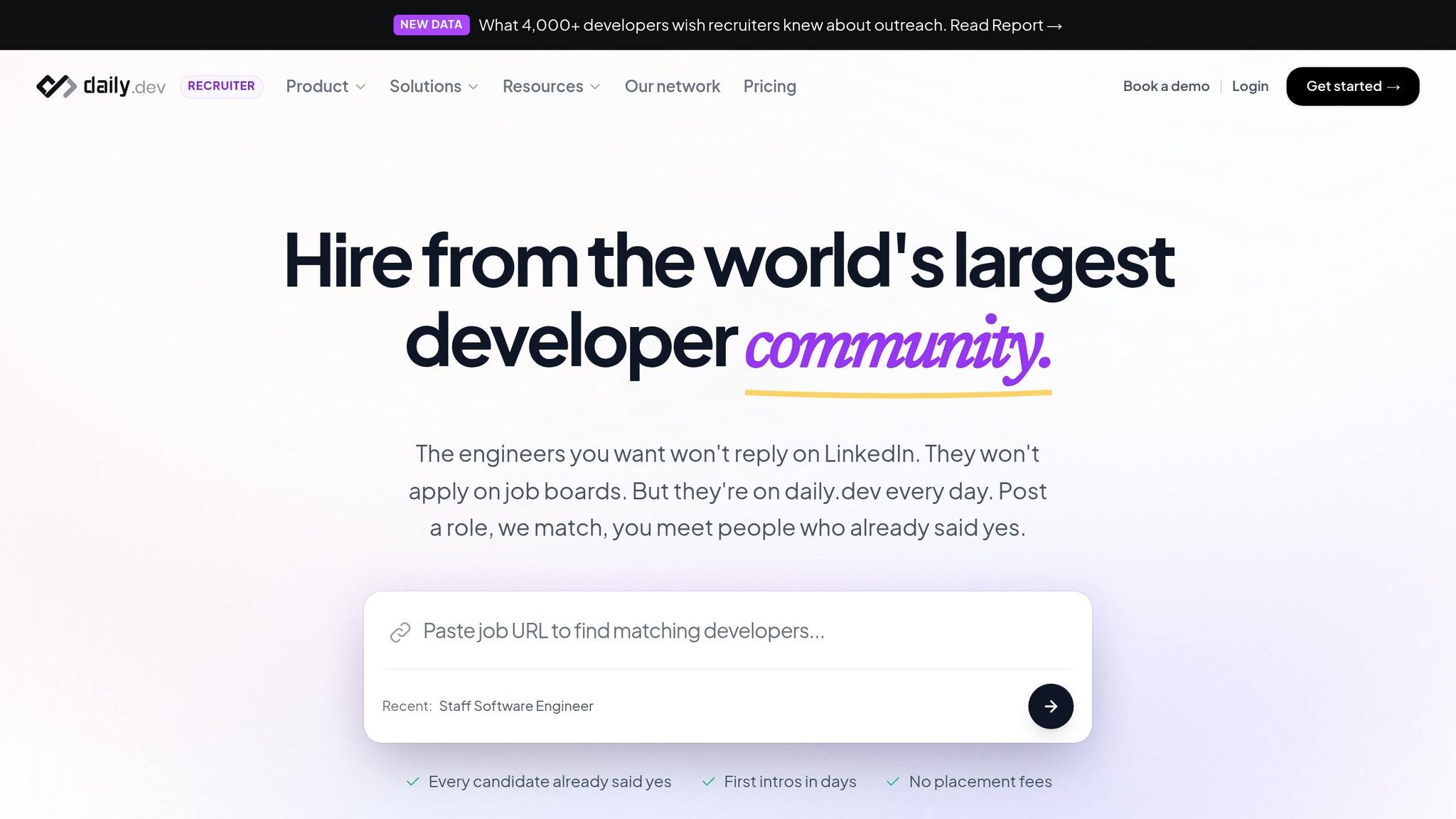
daily.dev Recruiter is designed to connect recruiters with developers where they’re already spending their time. Instead of relying on outdated resume keywords, the platform matches roles to developers based on the content they actively engage with. This approach is supported by impressive engagement metrics that reflect real developer activity.
Developer Engagement and Activity
Developers visit the platform about 200 times a month - roughly six times a day. It’s become a key part of their professional learning routine. With over 1 billion sessions logged, the platform ensures every match is backed by consistent, meaningful engagement.
Target Audience Relevance
What makes daily.dev stand out is its ability to reach developers who aren’t actively job hunting. Between 85%–90% of users are employed and not browsing traditional job boards, and 40% of the network includes senior software engineers and engineering leaders - groups that are notoriously hard to reach. Because developers use the platform for professional growth, job recommendations feel relevant and thoughtful, not like random spam.
"The engineers you want won't reply on LinkedIn. They won't apply on job boards. But they're on daily.dev every day." - daily.dev Recruiter
Posting Options and Flexibility
Posting a job is quick and simple. In about 10 minutes, you can paste your job link, answer a few setup questions, and go live. Recruiters can also include up to three custom screening questions to filter candidates before introductions are made. To streamline workflows, the platform integrates with developer hiring platforms and ATS tools, preventing duplicate candidates and keeping things organized. Plus, when a developer declines a role, they share why - giving recruiters valuable feedback to fine-tune their approach.
Effectiveness in Attracting Qualified Candidates
Thanks to its double opt-in system, only developers who are genuinely interested connect with recruiters. This reduces the chances of ghosting, with first introductions typically happening within one to two weeks. Pricing is straightforward at $350 per month per role, with no placement fees, annual contracts, or limits on introductions.
2. Dice
Dice is a tech-focused job board built specifically for technology professionals. With its specialized tools and expansive reach, it has become a go-to platform for recruiters looking to connect with developers. Dice offers a unique approach to matching tech talent with job opportunities.
Developer Engagement and Activity
Dice connects recruiters to a network of about 7.8 million tech professionals. Impressively, 90% of these users are active on the platform monthly, and 44,000 new members join every month. Even better, 32% of these new users aren't on broader, generalist platforms. These numbers highlight Dice's ability to keep its community engaged and provide recruiters with a steady flow of fresh talent.
Target Audience Relevance
Dice uses a taxonomy system that maps over 300,000 skills and job titles, ensuring job postings align perfectly with how developers describe their expertise. Additionally, the Open Web tool gathers information from social media channels, giving recruiters a more comprehensive view of a candidate's technical skills.
"I like Dice as I consider it my secret goldmine of candidates that are not on other sourcing platforms." - Talent Acquisition Sourcing Supervisor, DISH
Posting Options and Flexibility
Dice operates on a slot-based model, which allows recruiters to reuse a job slot as soon as a position is filled. The IntelliSearch™ feature simplifies the process further by letting recruiters paste a job description and instantly receive a list of matching candidates. This AI-powered tool even ranks applicants based on how well they meet the job's requirements. To further streamline your screening, you can use a tech candidate fit analyzer to score applicants based on specific skills. Plus, Dice integrates smoothly with ATS systems, making it easy to manage workflows.
These features make posting jobs on Dice both efficient and effective, saving recruiters time while improving results.
Effectiveness in Attracting Qualified Candidates
Dice consistently delivers strong results. For example, 97% of employers receive an applicant within 24 hours, and 71% of these applications meet high-quality standards. Branded profiles also perform well, increasing applications by 22%. Pricing starts at $399 for a single 30-day job slot, with subscription plans available: the Starter plan ($499/month for 3 slots) and the Standard plan ($799/month for unlimited direct-hire posts).
3. Wellfound
Wellfound, formerly known as AngelList Talent, is a platform uniquely tailored for developers eager to join startups. With over 12 million startup-focused candidates and approximately 134,000 new users joining monthly, it boasts engagement levels that are 10 times higher than other job-search platforms .
Developer Engagement and Activity
Wellfound's job posting policies are designed to encourage transparency and drive interaction. Listings must include a salary range within an $80,000 bracket and an equity range capped at 15%. Posts that skip these details are deprioritized in search results. This approach significantly boosts engagement, leading to 30% more applications . The result? A highly active and startup-centric talent pool.
Target Audience Relevance
This platform is built exclusively for startups, catering to over 25,000 companies, ranging from pre-seed ventures to post-IPO firms . Its developer base includes more than 2 million remote professionals, covering 100+ specializations . If you're hiring for a Series A startup and need a senior backend engineer open to equity compensation, Wellfound is where you'll find them.
Posting Options and Flexibility
Wellfound offers a variety of job posting plans to suit different hiring needs:
- Free Plan: Includes unlimited job postings, a built-in ATS (Track), and integrations with popular systems.
- Recruit Pro ($499/month): Provides advanced filters, unlimited messaging, and full resume access.
- Autopilot and Curated: Custom-priced options that focus on personalized outreach and pre-vetted candidates .
This flexibility ensures startups can align their hiring strategy with their budget and requirements.
Effectiveness in Attracting Qualified Candidates
Wellfound's Curated pool has proven to deliver high-quality candidates efficiently. Companies like Modern Health, Alto, and Branch have reported faster sourcing and better candidate seniority. David Lokshin, founder of Trace, shared his experience:
"What we've found through Curated is better candidates, faster sourcing, less headache, and overall better results." - David Lokshin, Founder, Trace
Another testimonial highlights the platform's relevance for startups:
"The types of candidates on Wellfound are interested in startups... I love the expected salaries, desired role, and skills, especially for engineers. It makes it so I know exactly who I'm messaging." - Modern Health
One important consideration: free job posts may lose visibility after 48–72 hours as paid listings take priority . If inbound applications are your primary focus, upgrading to Recruit Pro or opting for a promoted listing can help maintain consistent exposure.
4. Built In
Built In is a tech-centered platform that combines editorial content, employer branding, and job postings to connect with developers during their regular consumption of industry news. With over 5 million monthly visitors - 32% of whom specialize in Software Engineering and Data Science - it provides a strategic way to reach highly skilled tech professionals .
Developer Engagement and Activity
Built In seamlessly integrates job discovery into its content, offering newsletters, tech trend updates, and an AI-powered matcher to simplify the application process. Its "Content Studio" creates Employer Snapshots and Insider Spotlights, which are concise profiles showcasing a company’s tech stack, work culture, and leadership . Ricky, the Director of Talent Acquisition at Shapeways, shared his thoughts:
"Other content platforms feel generic. When Built In tells stories, it feels more real, and that gives it credibility."
Target Audience Relevance
Built In’s audience is predominantly experienced professionals, with 65% of users being mid-to-senior level employees who average 8.5 years of work experience . This makes it particularly effective for recruiting senior backend developers, AI/ML experts, and DevOps specialists. The platform also features job boards and "Best Places to Work" lists tailored to major U.S. tech hubs like Austin, Chicago, NYC, San Francisco, Seattle, and Atlanta, ensuring job postings reach locally relevant talent . Its flexible posting options are designed to meet diverse hiring needs.
Posting Options and Flexibility
Built In offers tiered pricing plans to suit different hiring demands:
| Plan | Monthly Cost | Key Features |
|---|---|---|
| 1 Job Slot | $99 | Basic visibility |
| 3 Job Slots | $249 | Basic visibility |
| Standard | $500+ (billed annually) | Unlimited listings, ATS sync, featured placement |
| Premium | $1,000+ (billed annually) | All Standard features plus branded content and a dedicated Customer Success Manager |
Standard and Premium plans include ATS integrations with systems like Greenhouse, Lever, and Workday .
Effectiveness in Attracting Qualified Candidates
Built In claims to deliver 4.5 times more clicks-to-apply compared to other platforms . Additionally, Standard and Premium tiers reportedly generate 500% more applicants than basic listings . The platform also features a Candidate Viewer tool, allowing recruiters to identify and reconnect with professionals who visited their company profile but did not complete an application . This tool can be especially useful for filling challenging roles.
One-third of U.S.-based HealthTech and e-commerce unicorns use Built In to meet their hiring needs, highlighting its strength in competitive tech recruiting . Maria, a Technical Recruiter at Grubhub, shared her experience:
"We used to post on Indeed and Dice but found Built In was much better for filling our technical roles."
For roles that are hard to fill, having the ability to re-engage potential candidates can make all the difference.
5. Remote OK
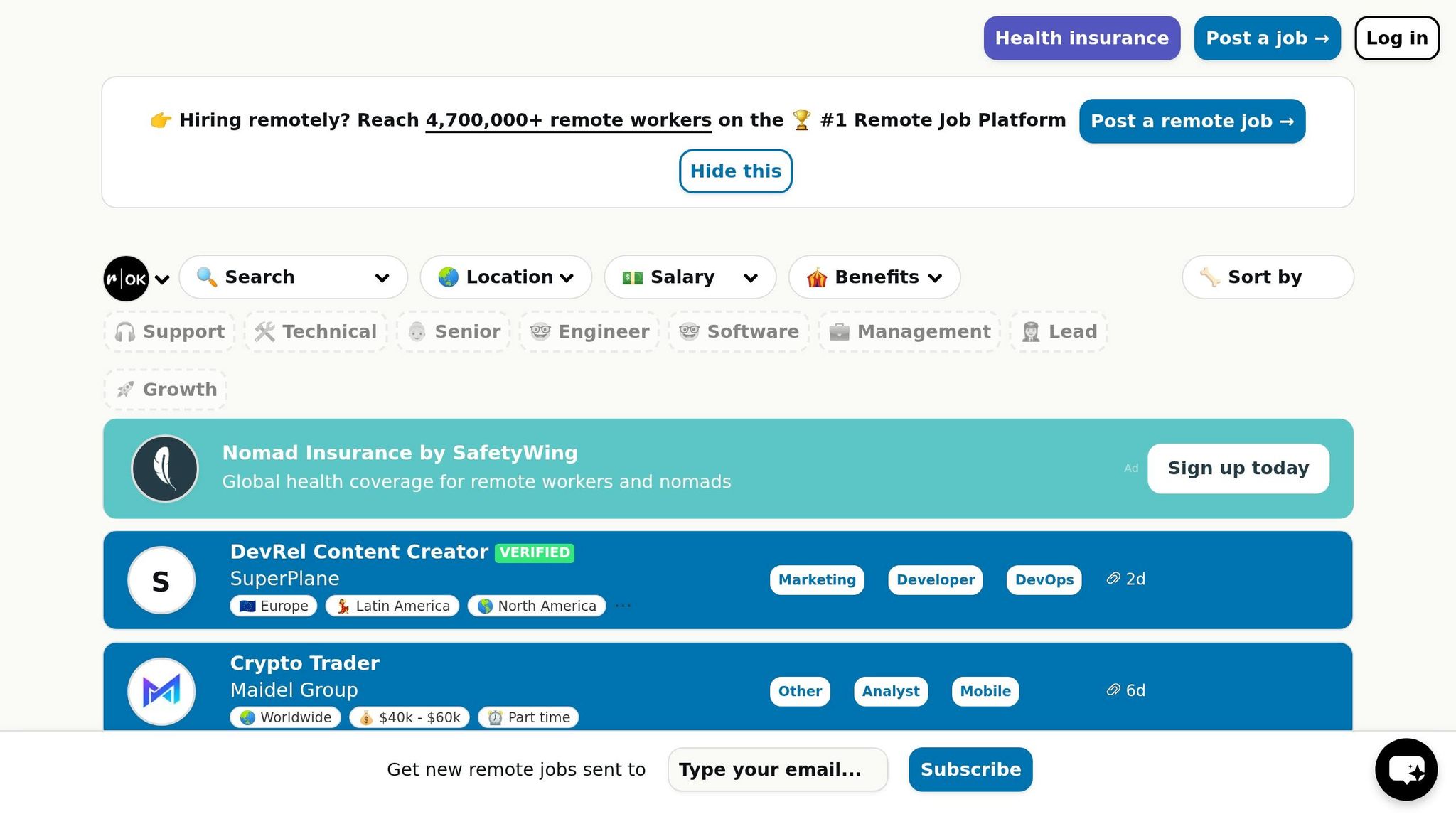
Launched in 2015, Remote OK has become a go-to platform for remote work opportunities, reaching over 4.7 million remote workers and attracting 500,000 monthly visitors. It connects employers with a skilled audience of mid-to-senior professionals, including software engineers, DevOps specialists, and product designers, all actively searching for location-independent roles .
Developer Engagement and Activity
Remote OK stands out with tools designed specifically for remote job seekers. Its tag filtering system allows developers to search for roles based on specific tech stacks like React, Python, Go, Rust, or Kubernetes. Salary ranges are clearly displayed on job listings, helping candidates quickly assess opportunities. Additionally, Remote OK amplifies job visibility by cross-posting to 246 other job boards via API and indexing listings on Google for Jobs, ensuring your postings reach a broader audience .
Target Audience Relevance
Remote OK focuses on niche, engaged communities, particularly digital nomads and indie hackers. It further boosts exposure by cross-posting jobs to Nomad List. This makes the platform especially appealing for startups, SaaS companies, and remote-first teams looking to hire engineers for globally distributed, asynchronous roles. With a growing section dedicated to AI jobs, Remote OK also caters to the increasing demand for machine learning and automation expertise. (See our guide on recruiting machine learning experts for more sourcing tips.)
Posting Options and Flexibility
Job postings start at $299 for a 30-day listing, with optional upgrades to enhance visibility:
| Add-On | Cost | Visibility Boost |
|---|---|---|
| Email blast to 2.4M+ candidates | +$99 | 3x more views |
| Sticky for 1 week | +$199 | Keeps post at the top of the feed |
| Sticky for 1 month | +$597 | 9x more views |
| Brand color highlight | +$499 | 3x more views |
| Company logo next to post | +$49 | Improves brand visibility |
For posts with fewer than 200 "Apply" clicks, Remote OK provides an automatic bump at no extra charge .
Effectiveness in Attracting Qualified Candidates
The platform's pay-to-post model ensures only serious employers committed to remote work list jobs, maintaining a high-quality pool of opportunities for developers. Industry testimonials highlight Remote OK's ability to deliver better-qualified candidates compared to traditional job boards .
To maximize results, set the job location to "Worldwide" - these listings rank higher in search results - and prioritize your most relevant tech stack tags, as only the first 3–4 are displayed. Remote OK's approach consistently attracts skilled, remote-ready candidates.
6. We Work Remotely
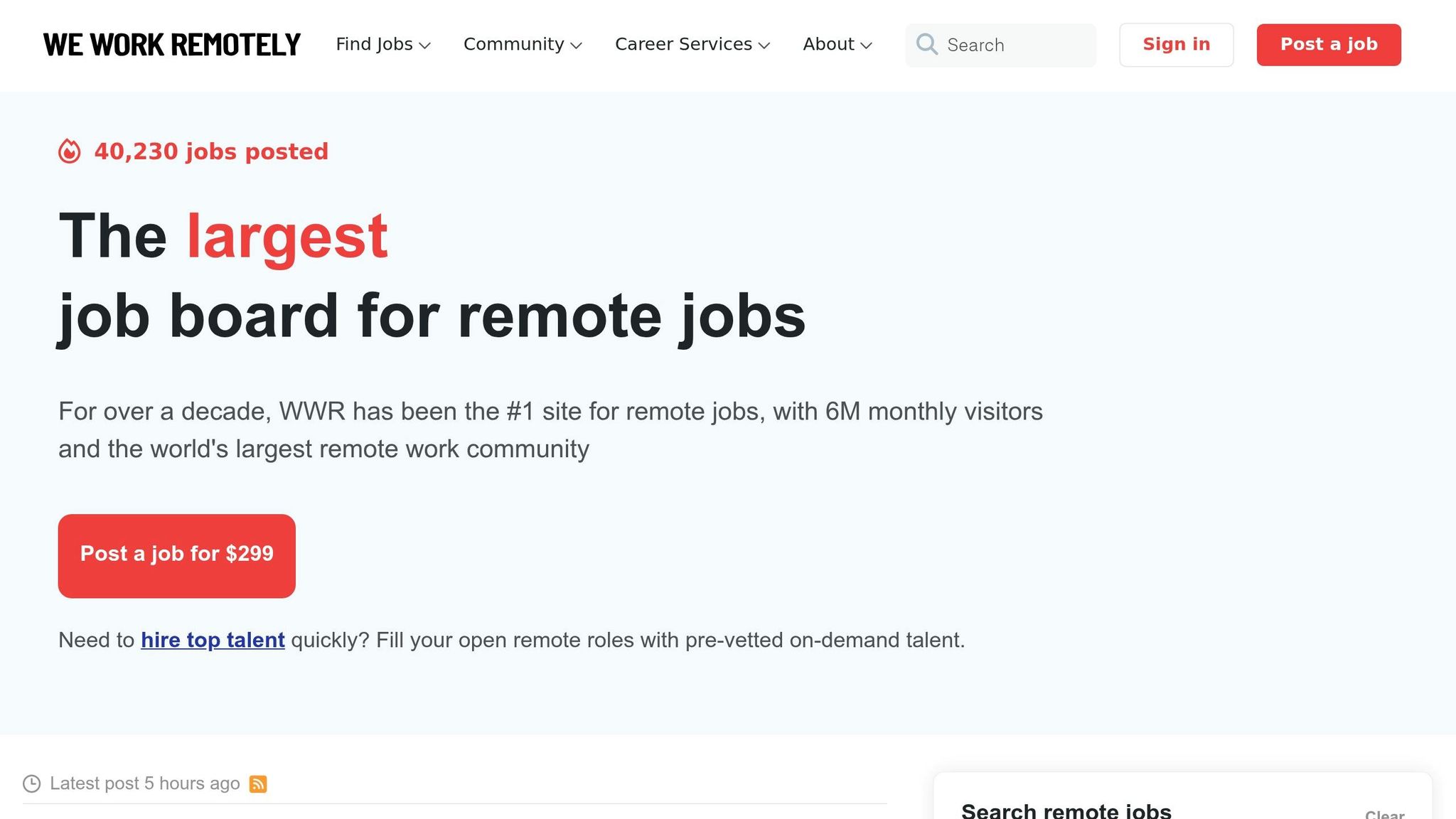
We Work Remotely (WWR), launched in 2011, has become a go-to platform for remote work opportunities. With over 6 million unique visitors and more than 1,000 new job postings each month, WWR stands out as the largest remote work community . Unlike many job boards that aggregate listings from other sites, WWR only features postings submitted directly by employers. This ensures that every listing is both up-to-date and legitimate, making it a trusted resource for developers seeking remote roles.
Developer Engagement and Activity
WWR categorizes developer roles into specific technical areas: Full-Stack Programming, Front-End Programming, Back-End Programming, and DevOps/Sysadmin. This organization makes it easy for developers to zero in on positions that align with their expertise without wading through irrelevant listings. To keep users engaged, the platform allows developers to set up automated email alerts tailored to their niche or preferred region, saving them the hassle of constant manual searches .
Target Audience Relevance
WWR’s community spans 99% of countries worldwide , making it a truly global platform. With 86% of developers now working remotely , the platform is laser-focused on connecting employers with candidates who are fully committed to remote work. For employers, this focus minimizes the time spent filtering out candidates unwilling to work remotely.
Posting Options and Flexibility
Employers can post a standard job listing for $299, which stays live for 30 days and is distributed to Google Jobs and over 20 niche job boards. Additional options include:
| Feature | Description | Cost |
|---|---|---|
| GeoLock | Limits job visibility to specific countries or regions | $99 |
| Filtering Service | A human reviewer prioritizes applicants based on your criteria | $199 |
| Pro Account | Includes a 10% discount on posts, a Pro badge, and event access | $99/mo |
| Bundles | Discounts for purchasing multiple listings | Up to 40% off |
First-time posters can use the code "WELCOME50" to save $50 on their first listing . For companies hiring for multiple roles, bundle packages offer a cost-effective way to manage postings.
Effectiveness in Attracting Qualified Candidates
WWR boasts a 90% fill rate for jobs posted on the platform, with 80% of customers returning month after month . Job listings receive five times more visibility and double the social media engagement compared to other platforms .
"I'm really happy that We Work Remotely exists. We use it, it's amazing, and it works." - Hiten Shah, Co-Founder, FYI
To maximize results, use clear, searchable job titles like "Senior Python Engineer." For roles with high applicant volume, the $199 human filtering service is a valuable add-on, helping employers prioritize candidates who meet their technical requirements . With its focus on remote developers, WWR positions itself as a strong alternative to LinkedIn for companies targeting this niche audience.
7. Relocate Me
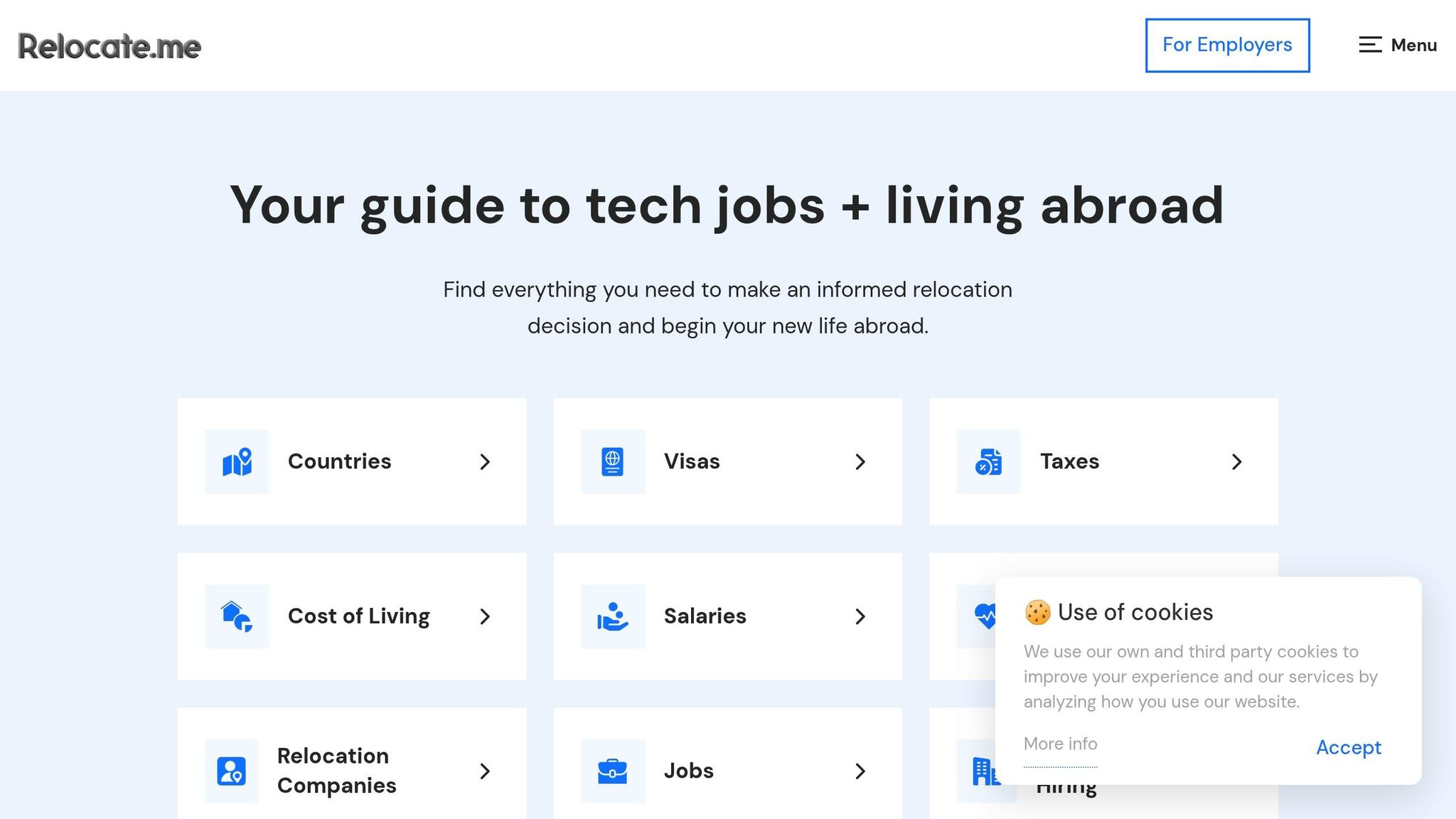
Relocate Me is a niche job board designed for IT and engineering professionals seeking on-site or hybrid roles that include relocation sponsorship. The platform exclusively caters to candidates who are already motivated to move abroad, making it a focused space for connecting employers with relocation-ready talent and helping them identify qualified technical candidates .
Developer Engagement and Activity
Relocate Me has cultivated a strong community of 300,000 developers and attracted 1 million users in just the past year. The site generates an impressive 4.5 million pageviews annually, with individual job posts receiving over 2,000 views monthly. Additionally, their Telegram community, featuring more than 25,000 international job seekers, further amplifies the visibility of job postings .
Target Audience Relevance
The platform primarily attracts experienced professionals, with the average user being 30 years old and boasting 5–8 years of experience. Its audience spans over 150 countries and focuses exclusively on tech roles like software development, DevOps, and UX design. This tight focus ensures that employers receive fewer irrelevant applications, saving time during the hiring process .
"The best way to hire software developers is matching what you offer - relocation - with the top talent seeking that out."
- Andrew Stetsenko, Founder, Relocate.me
Posting Options and Flexibility
Relocate Me operates on a pay-per-job-slot model, with no free posting options or placement fees. Their Advanced Plan offers additional perks, such as candidate vetting, featured placement in email newsletters, and a customized company page with a unique URL to highlight your relocation packages and company culture .
Effectiveness in Attracting Qualified Candidates
This pricing model is designed to attract highly motivated candidates. Since all users are actively searching for roles with relocation benefits, postings reach an audience already aligned with opportunities that include visa sponsorship, moving allowances, or housing support. For employers hiring at scale, the Advanced Plan's candidate vetting service helps vet technical skills and filter out less qualified applicants, streamlining the recruitment process .
8. Hacker News
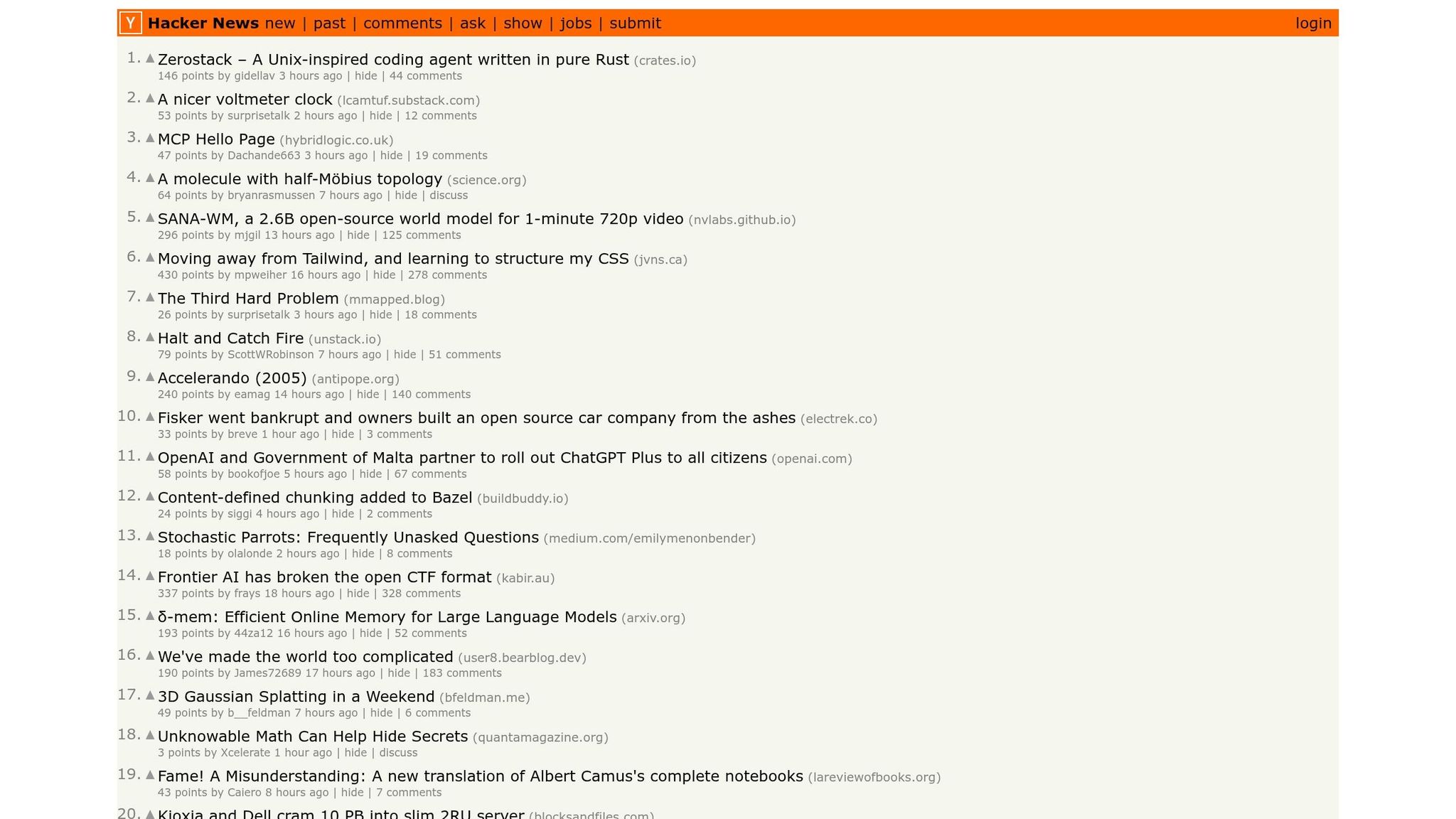
Hacker News takes a community-driven approach to job postings, making it a go-to spot for developers and companies alike. On the first weekday of every month, the platform hosts a free "Who Is Hiring?" thread, which stays open for comments for two weeks . This format not only showcases job opportunities but also fosters discussions that reveal candidates' technical interests and alignment with company culture. For instance, in May 2026, the thread received 548 comments and featured 335 unique job listings, while February 2026 saw 601 comments, highlighting the platform's steady and active engagement .
Developer Engagement and Activity
The Hacker News audience is made up of highly skilled developers, often focused on cutting-edge technologies like Rust, Elixir, Haskell, and AI-driven platforms . What sets this platform apart is how candidates interact with the listings. Instead of simply applying, they frequently dive into detailed discussions about a company's tech stack, architecture, and engineering practices - creating lively and technical conversations.
Target Audience Relevance
Hacker News appeals to developers who are passionate about their craft. Over time, technologies like React (16,630 jobs), Python (14,268 jobs), and TypeScript (8,880 jobs) have dominated its job listings. That said, the platform is also a strong choice for finding specialists in less common technologies like Go (6,510 jobs) and Rust (2,701 jobs) . Remote work opportunities are particularly popular, with 31,629 remote positions indexed - far outpacing those in tech hubs like San Francisco (9,837) and New York City (7,232) .
Posting Options and Flexibility
Posting on Hacker News is free, but there’s a catch: only people directly involved in the hiring company can submit listings. Third-party recruiters are strictly prohibited .
"You can't post these as submissions to HN, but we have monthly 'Who Is Hiring?' threads that are free to everyone... you have to personally be part of the hiring company in order to post. Third-party recruiters and job boards aren't allowed." - dang, Hacker News Moderator
For YC-backed founders, there's an added perk: they can feature job ads on the Hacker News front page for several hours, as well as in the jobs tab for about a week .
Effectiveness in Attracting Qualified Candidates
Hacker News delivers a mix of results, often depending on how well the job posts resonate with its audience. For example, FUTO has successfully hired five employees directly through its recurring posts, encouraging applicants to mention Hacker News in their cover letters . A boutique consulting firm reported receiving about 500 emails per post, though sheer volume doesn’t always translate to quality .
Transparency is key to success here. Posts that clearly outline the tech stack, provide honest job descriptions, and include a direct way to contact the company tend to perform better. On the flip side, vague or overly salesy language often falls flat with this community .
One tip for employers: keep a close eye on your applicant tracking system (ATS) and spam filters. In one notable case from April 2026, Oklo’s ATS initially rejected a candidate with a nuclear engineering degree. A hiring manager later intervened, adjusted the filter, and personally reached out to request the resume . This highlights how easy it is to miss out on top-notch candidates if automated systems aren’t carefully monitored.
9. GitHub
GitHub serves as a collaborative platform where you can evaluate real-world code contributions and technical decisions. With a community of over 100 million registered developers , it offers a unique opportunity to explore actual work histories and coding practices.
Developer Engagement and Activity
Features like the contribution graph, pinned repositories, and pull request discussions provide valuable insights into a developer's activity and collaboration style. These tools help you understand how candidates work in a team environment and the kind of projects they contribute to.
Target Audience Relevance
Many top-tier engineers actively maintain their GitHub profiles while rarely updating LinkedIn or using traditional job boards. Interestingly, less than 5% of recruiters source candidates from GitHub . This means candidates are less inundated with recruiter messages, making them more likely to respond to personalized outreach. GitHub's active community of developers also opens up creative ways to identify and connect with potential hires.
Posting Options and Flexibility
GitHub doesn't have a standard job posting feature. Instead, employers can use Advanced Search with filters for programming language, location, recent activity (pushed:>), and the hireable:true flag to find candidates. To streamline this process, AI-powered tools for coding-focused candidate sourcing like hireEZ (starting at AI-powered tools like hireEZ (starting at $169/month) and Vamo (starting at $249/month) can analyze repositories and assist with contact discovery69/month) and Vamo (starting at $249/month) can analyze repositories and assist with contact discovery .
Effectiveness in Attracting Qualified Candidates
When combined with these tools, personalized outreach on GitHub can achieve response rates of 25%–40%, significantly higher than LinkedIn's 10%–15% . Mentioning specific repositories or technical decisions in a pull request often improves reply rates.
"Resumes tell you what someone claims they can do. GitHub shows you what they have actually built." - Vamo Talent
Take Codility's 2023 recruiting strategy as an example. By shifting from generic messages to personalized outreach co-written by hiring managers, referencing candidates' code, they consistently achieved a 30% response rate . However, avoid posting job pitches in GitHub Issues or Pull Request comments, as this is considered spam and could damage your reputation .
10. Lemon
Lemon (Lemon.io) stands out from traditional job boards by offering a curated approach to hiring. Instead of browsing endless profiles, you simply submit a request, and within 24–48 hours, Lemon's team provides 1–3 hand-picked, vetted candidates tailored to your needs . This platform is built for startups and scaleups that need senior engineers quickly, without the hassle of sorting through unqualified applicants.
Developer Engagement and Activity
Lemon skips inbound applications altogether. Instead, they actively search through over 500 job boards and developer communities to find top-tier talent . Every candidate undergoes a rigorous four-step vetting process, which includes a live technical interview with an experienced Engineering Manager. This process eliminates about 98.8% of applicants . The result? A highly selective pool of 1,500+ senior engineers with an average of 7+ years of experience, supported by a passive pipeline of over 80,000 qualified professionals .
Target Audience Relevance
Lemon evaluates candidates on their ability to thrive in dynamic startup environments. This includes assessing their skills in managing ambiguity, adapting to shifting priorities, and working with minimal oversight . As of 2026, their vetting process also tests proficiency with modern AI coding tools, ensuring developers are equipped to excel in fast-paced, lean operations.
Posting Options and Flexibility
Forget traditional job postings. With Lemon, you describe your project needs, and within 24–48 hours, you receive pre-vetted candidates ready to dive in. Developers are available for part-time (20 hours/week) or full-time (40 hours/week) engagements on a flexible, month-to-month subscription based on hourly rates - there are no upfront deposits or platform fees . For those seeking permanent hires, Lemon offers a flat-fee direct hire option for $14,300, which includes a 30-day replacement guarantee .
Effectiveness in Attracting Qualified Candidates
Lemon's approach is incredibly efficient: 80% of startups hire from the first batch of candidates, and 98% of clients hire the first developer suggested . Hourly rates range from $60 to $120, depending on the developer's seniority and tech stack . Plus, a 20-hour paid trial allows you to test a developer on your own codebase before making a long-term commitment .
"Within week of engaging them I had 8 interviews lined up and was able to select not one but 2 new staff. I've been a hiring manager for 15 years and I can't believe how high quality is!" - Brent Maxwell, CEO & Hiring Manager, DEFY labs
"I recommend Lemon to anyone looking for top-quality engineering talent. We previously worked with TopTal and many others, but Lemon gives us consistently incredible candidates." - Allie Fleder, Co-Founder & COO, SimplyWise
11. Toptal
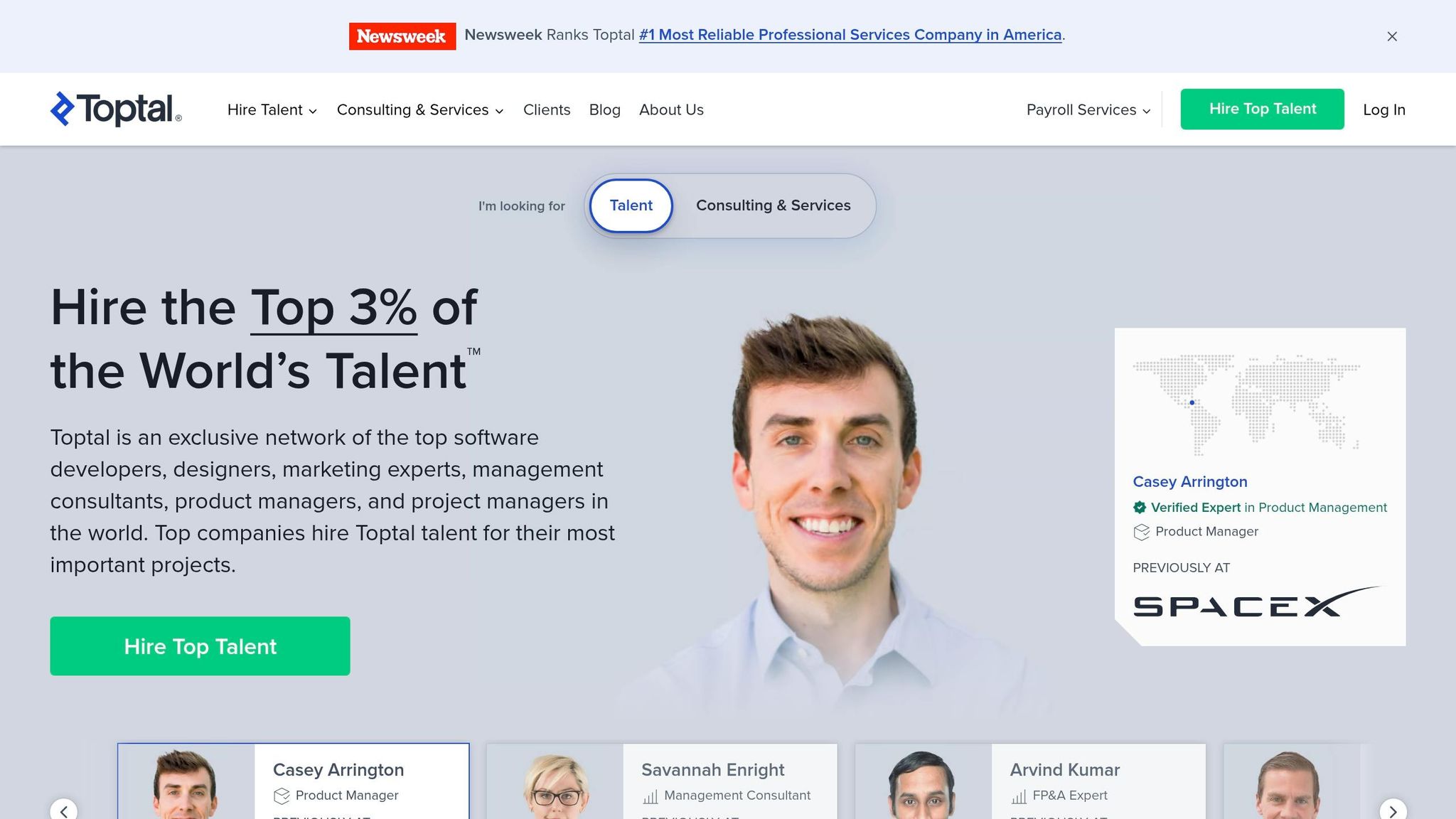
Toptal takes a unique approach to hiring by skipping traditional job postings altogether. Instead, you begin with a consultation with a client advisor, outline your technical requirements using a developer hiring checklist, and let their team match you with candidates. Most clients are paired with a developer in less than 24 hours, and the entire hiring process is usually completed within 48 hours . This quick turnaround makes Toptal a go-to option for accessing top-tier talent without delays.
Developer Engagement and Activity
Toptal prides itself on maintaining an exclusive network. Out of over 200,000 applicants each year, fewer than 3% are accepted . Every candidate undergoes a rigorous multi-week evaluation process that assesses language skills, interpersonal abilities, technical expertise, and domain knowledge . Once accepted, developers stay active in the network through dedicated Slack channels and "Toptal Academies", which provide structured opportunities to learn and adapt to emerging technologies .
Target Audience Relevance
Toptal is designed for businesses that need high-level expertise for critical projects. The network includes software architects, AI specialists, blockchain developers, and other seasoned professionals with extensive experience . If you're concerned about what's broken in developer hiring and want to avoid costly mistakes, Toptal offers a reliable solution.
Posting Options and Flexibility
Instead of posting jobs, you collaborate with a client advisor to define your needs, and Toptal handles the rest. Engagement options include hourly, part-time (20+ hours/week), or full-time (40 hours/week) arrangements. They also offer full project delivery services . Costs depend on factors like the developer's seniority, location, and the type of engagement. Developers set their own rates, while Toptal manages billing .
Effectiveness in Attracting Qualified Candidates
Toptal backs its services with a two-week no-risk trial, ensuring payment is required only if you're satisfied . This approach, paired with expert matching, results in an impressive 98% trial-to-hire success rate . Additionally, Toptal was named the #1 most reliable professional services company in America by Newsweek and Statista in 2026, based on feedback from 2,400 Fortune 500 decision-makers .
"Toptal is my go-to source to find high-quality talent I can't find elsewhere. I've been very impressed with the breadth and depth of talent they have been able to deliver." - Tess Caputo, Chief Operations Officer
"I have been working with Toptal engineers for several years now. They have all been exceptionally talented, very professional, highly productive, great team players, good communicators, and willing to go above and beyond." - Ian Stokes-Rees, Partner
12. WeAreDevelopers
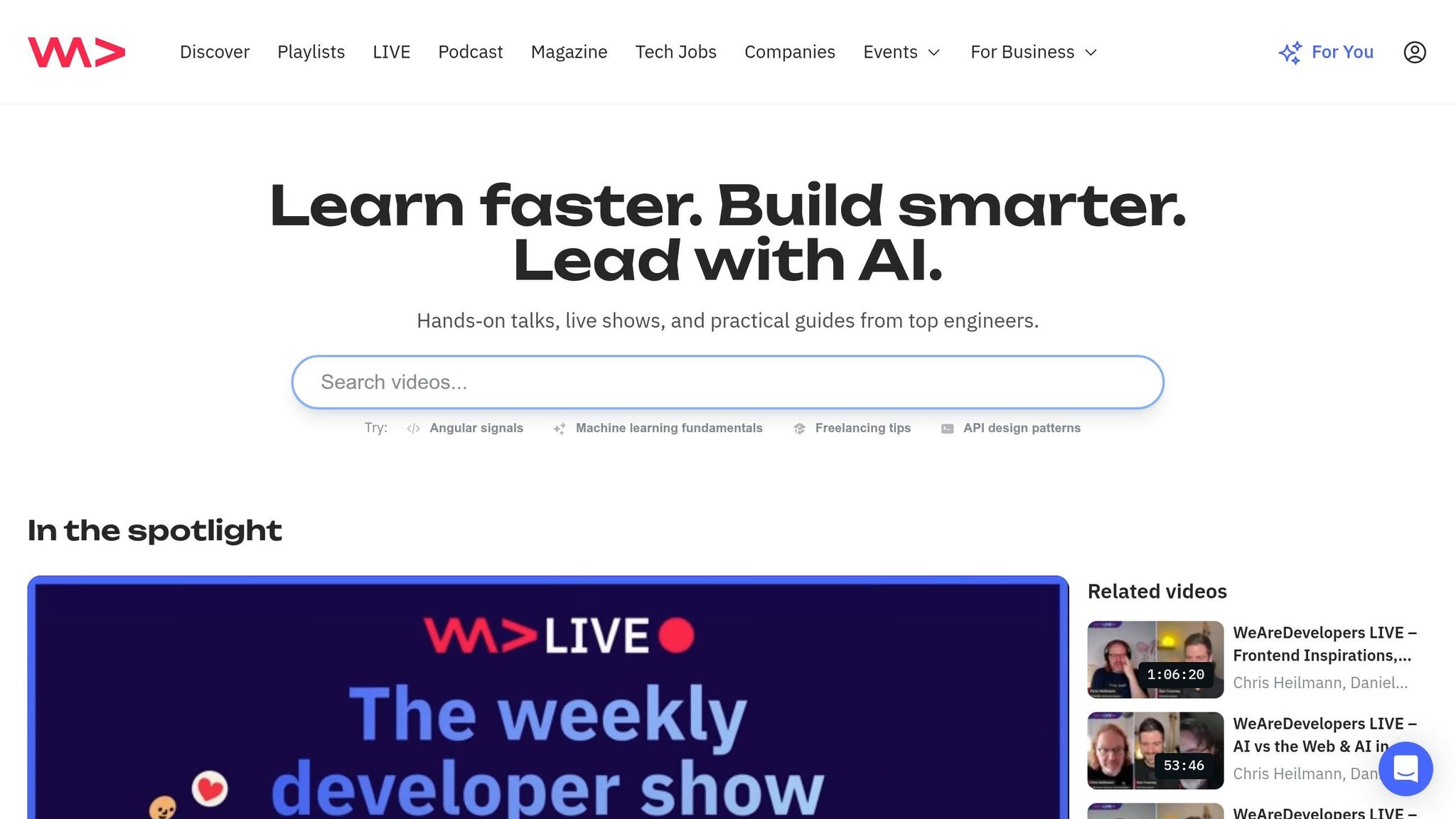
WeAreDevelopers is a platform that takes a fresh approach to connecting with developers. Moving beyond the idea of traditional job boards, it creates a dynamic ecosystem that supports professional growth. With an audience of over 1.7 million developers and AI professionals annually, and generating over 125 million interactions across its content channels, WeAreDevelopers ensures your job listings reach a highly engaged and active community .
Developer Engagement and Activity
WeAreDevelopers stands out for its deep connection with the developer community. Its initiatives include "WeAreDevelopers LIVE" shows, the bi-weekly "Dev Digest" newsletter, a magazine, and the "Coffee with Developers" podcast. These outlets feature technical topics like WebGPU, AI, and WebAssembly, providing valuable and hands-on content . This consistent engagement not only strengthens your brand's visibility but also builds trust with potential candidates long before they apply.
"WeAreDevelopers is the place where you meet everyone else in the industry and learn about the latest things." - David Singleton, CTO, Stripe
The platform's ability to keep developers engaged makes it a powerful tool for reaching the right candidates.
Target Audience Relevance
One of WeAreDevelopers' key advantages is its ability to find passive developer candidates - those who aren't actively job hunting but are open to opportunities. While only about 6% of the tech workforce is actively searching for jobs, the platform effectively reaches around 70% of professionals who fall into this passive category . This is especially useful for filling challenging roles in fields like AI research, cybersecurity, DevOps, or blockchain.
The platform also organizes the WeAreDevelopers World Congress, a major event for the tech community. For instance, the Berlin edition in July 2026 is expected to attract over 15,000 tech professionals and 500 global experts, with additional events planned for San Jose in September and Bengaluru in November .
Posting Options and Flexibility
For companies with immediate hiring needs, WeAreDevelopers offers single job ads starting at $810 for a 60-day listing, which includes automated candidate matching . For more extensive hiring efforts, the platform provides four annual membership tiers, each offering unlimited total job postings but with varying numbers of active ads at any given time:
| Membership Tier | Annual Price | Active Job Ads | Notable Extras |
|---|---|---|---|
| Talent Core | $5,040 | Up to 2 | Brand page, 2 Congress passes |
| Talent Growth | $9,840 | Up to 4 | Podcast feature, enhanced passive talent boost |
| Talent Leader | $19,080 | Unlimited | LIVE show feature, max passive talent boost |
| Talent Champion | $38,000 | Unlimited | Social media campaigns, 8 Congress passes |
These flexible options allow businesses to tailor their approach based on their hiring needs, whether they’re filling one position or staffing entire teams.
Effectiveness in Attracting Qualified Candidates
WeAreDevelopers offers strategies to make job postings more effective. For example, using specific job titles like "Senior Flutter Backend Developer" instead of broad terms like "Mobile Developer" can boost application rates by about 25%. How job descriptions impact developer hiring is clear: including a salary range in the listing can lead to a 75% increase in click-through rates . Additionally, leveraging podcast spots or newsletter ads within a membership plan can enhance your brand's visibility and credibility.
"WeAreDevelopers is my favorite conference. It's the best event you can go to if you are a developer!" - Joel Spolsky, Founder, Stack Overflow
Platform Comparison Table
These 12 platforms cater to different audiences, offer varying levels of targeting options, and come with diverse pricing structures. Here's an overview of their key features to help you choose the best fit for your recruiting needs.
| Platform | Developer Focus | User Base | Flexibility | Remote-Optimized | Starting Price (USD) |
|---|---|---|---|---|---|
| daily.dev Recruiter | Active vs passive developer recruitment strategies help identify pre-qualified talent | Millions of daily users | $350/month per role, no contracts | Yes | $350/month |
| Dice | Tech & IT professionals | 5.9M+ registered users | Pay-per-post or subscription | Yes | Varies |
| Wellfound | Startup-focused engineers | 8M+ candidates | Free basic; paid upgrades | Yes | Free–$299+/month |
| Built In | Tech professionals in U.S. cities | 2.8M+ monthly visitors | Subscription-based | Yes (U.S.-focused) | Custom pricing |
| Remote OK | Remote-first developers | 2M+ monthly visitors | One-time post fee | Remote only | ~$299/post |
| We Work Remotely | Remote developers globally | 4.5M+ monthly visitors | One-time or bundled postings | Remote only | $299/post |
| Relocate Me | Developers open to relocation | 200K+ candidates | Per-post model | Relocation-focused | Custom pricing |
| Hacker News | Senior, high-trust engineers | Millions of readers | Free ("Who's Hiring" threads) | Yes | Free |
| GitHub | Open-source contributors | 100M+ developers | Free job board | Yes | Free |
| Lemon | Vetted freelance developers | Curated network | Invite/application-based | Yes | Custom pricing |
| Toptal | Elite freelance talent | Top 3% of applicants | Project-based engagement | Yes | Custom pricing |
| WeAreDevelopers | Broad developer community + AI professionals | 1.7M+ annually | Single ad or annual packages | Yes | $810/listing |
A few standouts include daily.dev Recruiter, which integrates job discovery directly into developers' daily workflows, and Hacker News, known for its high-trust recruitment environment that attracts seasoned engineers. Platforms like Remote OK and We Work Remotely are tailored for remote roles, while Built In focuses on U.S.-based tech hubs.
Each platform offers unique advantages, so consider your budget, role requirements, and target audience when deciding. Whether you're looking for a global reach, niche communities, or remote-first talent, there's a platform to help you connect with top-tier developers efficiently.
Conclusion
LinkedIn isn't the go-to platform for developers. As mentioned earlier, most developers tend to overlook traditional outreach on LinkedIn. Instead, they gravitate toward platforms that offer engaging content and active communities.
These alternative platforms have changed how developers find job opportunities. Each of the 12 platforms highlighted caters to a specific segment of the developer workforce. For instance, Hacker News and GitHub attract experienced engineers with their focus on meaningful discussions and minimal distractions, while Toptal and Lemon target top-tier freelancers through rigorous vetting processes. Platforms like Remote OK and We Work Remotely are tailored for remote positions, while Built In works well for hiring within U.S. tech hubs. This variety demonstrates the need to align your hiring approach with the platform that best suits your goals.
But the real game-changer isn't just about where you post jobs - it's about how developers discover them. As daily.dev puts it:
"The engineers you want won't reply on LinkedIn. They won't apply on job boards. But they're on daily.dev every day."
When developers come across job opportunities as part of their regular online activities, rather than through impersonal outreach, the experience feels more authentic and relevant. This shift in context can make a significant difference in response rates and the quality of candidates.
FAQs
How do I choose the right platform for my developer role?
To choose the best platform, start by identifying your hiring priorities and understanding what each platform excels at. Platforms that cater specifically to developers often provide access to candidates who are more aligned with your needs compared to broader job boards. Focus on platforms that match your target candidate profile, attract the right audience, and cater to the technical skills or levels of experience you're seeking. Using a mix of platforms aimed at different candidate pools can also boost your chances of finding the perfect developer for your team.
What should I include in a developer job post to get more replies?
Crafting a job post that stands out is all about clarity and engagement. Start by detailing the required skills and any preferred qualifications - this helps candidates quickly assess if they're a good fit. Include information about the tech stack they'll be working with, as developers often prioritize roles that align with their expertise or interests.
Make sure to highlight the benefits and growth opportunities your company offers. Whether it's flexible work arrangements, professional development programs, or exciting projects, these details show candidates why your role is worth considering. Use inclusive language to ensure you're appealing to a diverse range of applicants.
Keep the post concise and structured. Avoid repeating information and focus on delivering the most important details. A friendly, engaging tone paired with a clear call to action - like encouraging candidates to apply or reach out with questions - can make all the difference in attracting responses.
How can I measure which job board is working best?
To measure how well a job board is performing, keep an eye on these key metrics: visitor-to-applicant rate, application-to-interview rate, and offer-to-hire rate. You’ll also want to track application volume, click-through rates, and cost per hire to get a clearer picture of its overall effectiveness.
For platforms tailored to developers, pay special attention to engagement stats like the number of qualified candidates and how often they respond. By regularly analyzing these metrics, you can pinpoint which job boards are helping you meet your hiring goals most effectively.
.png)